

Quick Answer Block
The heating effect of electric current happens when flowing electrons collide with the atoms of a conductor, making those atoms vibrate faster and raising the wire’s temperature. This is called Joule heating, and it’s why wires in appliances like heaters, toasters, and bulb filaments get hot when current passes through them.
Introduction
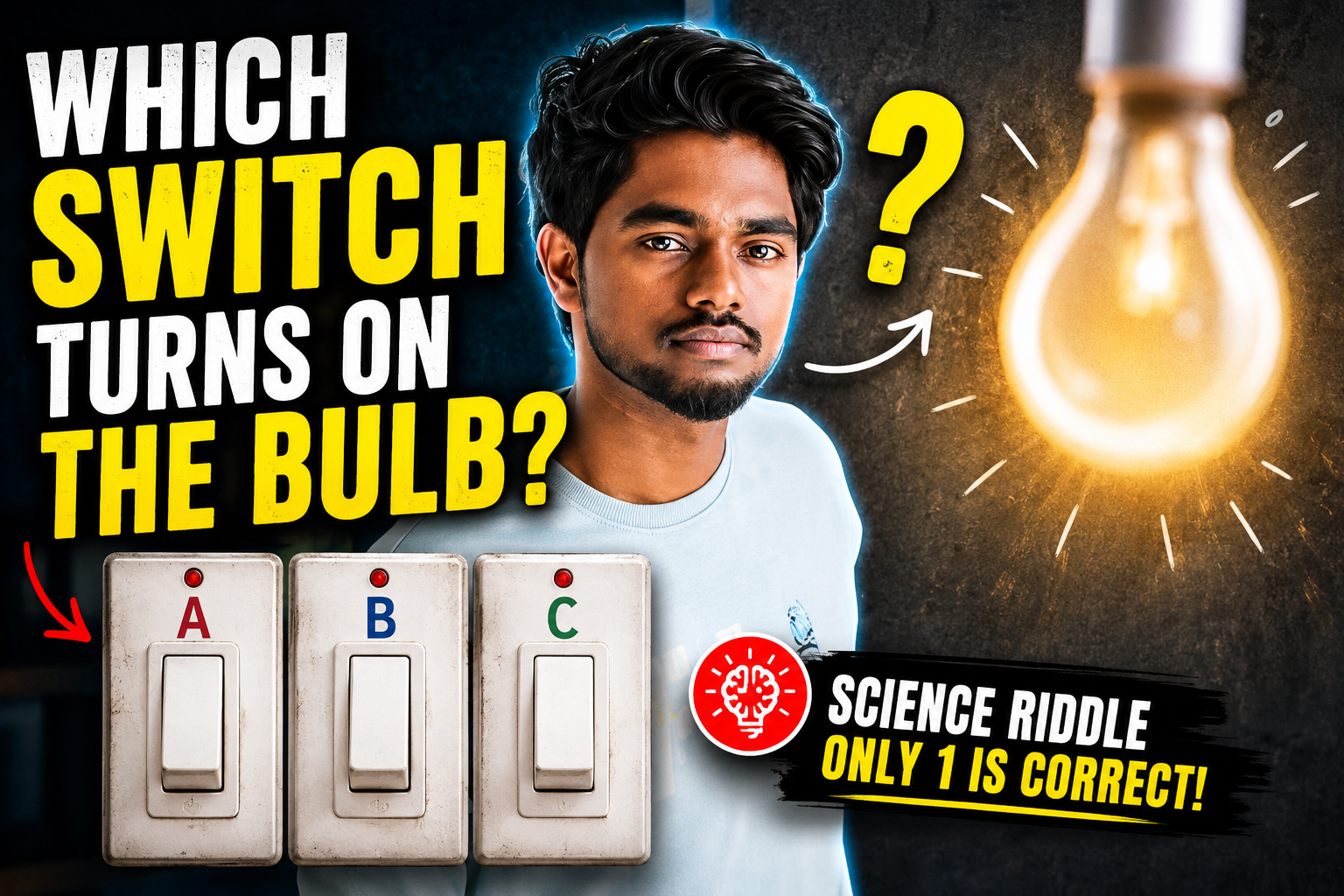
imagine standing in front of three unmarked switches, knowing only one of them controls a bulb in a room down the hallway. You can flick the switches as many times as you like, but you’re only allowed to walk to that room once. How would you figure out, with total certainty, which switch is the right one?
The answer isn’t guesswork — it’s physics, specifically the heating effect of electric current. In this article, we’ll build up the concept from a genuine hands-on experiment (a nichrome wire slicing through thermocol using nothing but a battery), work through exactly why current makes wires hot at the atomic level, and then use that same idea to crack the switch puzzle for good.
Electron Current vs Conventional Current
Before we talk about heat, it helps to be clear on what “current” actually means. When electrons flow through a circuit, the rate at which they move is called the electron current. Confusingly, though, physics defines a separate direction called conventional current, which flows in the exact opposite direction to the electrons — from the positive terminal of a battery to the negative terminal. Electrons themselves are actually moving from negative to positive, but by long-standing convention, we describe circuit direction the other way around.

What Is the Heating Effect of Electric Current?
When current flows through a circuit, it produces several distinct effects, and heating is one of the three major ones — alongside the chemical effect and the magnetic effect of current. The heating effect of electric current refers specifically to the fact that a conductor carrying current gets warmer, sometimes dramatically so, purely because of that current flowing through it.
This isn’t a rare or unusual occurrence — it happens in essentially every circuit to some degree. Well-designed appliances are engineered to minimize this heat where it isn’t wanted (to avoid wasting energy), but plenty of everyday devices are built specifically to take advantage of it.

The Nichrome Wire Experiment: Cutting Thermocol with Electricity
Here’s a simple experiment that makes this effect impossible to miss: take a thin wire, connect an alligator clip to each end, and try cutting a block of thermocol with the plain wire alone. It’s slow and messy — the wire just doesn’t cut cleanly.
Now connect one alligator clip to a battery’s positive terminal and the other to its negative terminal, completing the circuit so current can flow. Try cutting the same thermocol again with this now-connected wire, and the difference is immediate — it slices through smoothly, almost like a hot knife through butter (which, as it turns out, is exactly what’s happening).
The wire used here is typically nichrome — an alloy of nickel and chromium. Once connected to the battery, current flowing through the nichrome wire generates enough heat energy to melt through the thermocol cleanly, the same way a genuinely heated knife would cut it more easily than a cold one.
Why Does Current Make a Wire Hot? (The Atomic-Level Explanation)
Here’s an analogy that makes this click for most students: think about a hot tawa (griddle) sitting on a stove. The stove is hotter than the tawa, so heat transfers from the stove into the tawa. Inside the tawa, this incoming heat energy makes its atoms absorb energy and vibrate more vigorously — their average kinetic energy increases, and that increase in kinetic energy is precisely what we experience as a rise in temperature.


The exact same mechanism happens inside a current-carrying wire. As electrons flow through the wire, they collide with the atoms that make up the wire’s structure. Each collision transfers energy to those atoms, making them vibrate faster. Just like the tawa’s atoms absorbing heat from the stove, the wire’s atoms absorb kinetic energy from these electron collisions — and the wire heats up as a direct result.
What Is Resistance, and Why Does It Matter?
Every material placed into a circuit resists the flow of electrons to some extent — this opposition is called resistance. Different materials and different electrical components have different resistance values, and this matters enormously for the heating effect: the higher a material’s resistance, the more collisions happen between electrons and atoms, and the more heat energy gets generated.
This conversion of electrical energy into heat energy, caused specifically by resistance, is known as Joule heating. It’s the formal name for exactly what we saw happen in the nichrome wire experiment.
Why Nichrome and Tungsten Are Used in Real Appliances
This resistance-heat relationship explains a very practical design choice. Nichrome wire has noticeably higher resistance than copper wire of the same length and thickness — which is precisely why a copper wire wouldn’t cut through thermocol nearly as effectively; it simply doesn’t generate as much heat for the same current.
Because nichrome generates so much heat so reliably, it’s the standard heating element inside irons, water heaters, and toasters. Tungsten, another high-resistance material, is used for a slightly different reason — its resistance is high enough that it glows rather than just heating up, which is exactly why tungsten wire is used as the filament inside incandescent light bulbs.
You can actually observe this principle yourself with a simple homemade demonstration: poke three small holes into a jar lid, insert a wire through two of the holes, and connect the wire’s ends to the graphite core (the “lead”) removed from a pencil. Seal the lid back onto the jar and connect the wire to a battery — the graphite core will glow, just like a miniature bulb filament, and the jar will genuinely feel warm to the touch. This is the heating effect of current, visibly demonstrated with materials from around the house.

Solving the Switch Mystery Using the Heating Effect

Now we can finally solve the puzzle from the introduction. With three switches — A, B, and C — and only one trip allowed to the room with the bulb, here’s the method: turn on Switch A and leave it running for around 30 minutes. Then turn off Switch A and immediately turn on Switch B, and walk to the room right away.If the bulb is lit when you arrive, Switch B is the correct switch — simple enough. But if the bulb is off, you can’t yet tell whether it’s Switch A or Switch C, since both are currently switched off. This is exactly where the heating effect comes in: touch the bulb. If the bulb feels warm, Switch A was the one that had been running for 30 minutes, heating up the filament through Joule heating — meaning Switch A is the bulb’s switch. If the bulb feels cool, then Switch A was never connected to it at all, and Switch C must be the correct one.
Common Misconceptions
A common misunderstanding is assuming the heating effect only occurs in appliances specifically designed to produce heat, like heaters or toasters — in reality, it happens in every current-carrying conductor to some degree, including wires inside phone chargers, computers, and LED circuits; well-designed devices simply minimize it where it isn’t useful. Another mix-up is treating conventional current and electron current as flowing in the same direction — they’re defined in exact opposite directions by convention.
Interesting Facts
- The same Joule heating effect that helps cut thermocol also causes real energy losses in long-distance power transmission lines, which is one reason high-voltage transmission is used to minimize current (and therefore heat loss).
- Tungsten was chosen for bulb filaments partly because it has an extremely high melting point, letting it glow white-hot for thousands of hours without melting.
- Fuses in household wiring intentionally use a specific low-melting-point wire that’s designed to heat up and break the circuit if current gets dangerously high — a safety application of the very same heating effect.
Comparison Table
| Material | Relative Resistance | Heat Produced | Common Use |
|---|---|---|---|
| Copper | Low | Low | General wiring (minimal heat loss desired) |
| Nichrome | High | High | Iron boxes, toasters, water heaters |
| Tungsten | Very high | Very high (glows) | Incandescent bulb filaments |
FAQ Section
Q1. What is the heating effect of electric current? It’s the production of heat energy in a conductor when electric current flows through it, caused by electrons colliding with the conductor’s atoms and making them vibrate faster.
Q2. What is Joule heating? Joule heating is the formal name for the conversion of electrical energy into heat energy in a conductor, caused specifically by the conductor’s resistance to current flow.
Q3. Why does nichrome wire get hotter than copper wire? Nichrome has higher resistance than copper of the same length and thickness, so more electron-atom collisions occur, producing significantly more heat energy.
Q4. Why is tungsten used in bulb filaments? Tungsten has very high resistance and an extremely high melting point, allowing it to heat up enough to glow brightly without melting during normal use.
Q5. What is the difference between conventional current and electron current? Electron current is the actual direction electrons move (negative to positive), while conventional current is defined in the opposite direction, from positive to negative, by long-standing convention.
Q6. What are the three main effects of electric current? The three major effects are the heating effect, the chemical effect, and the magnetic effect of electric current.
Q7. Does the heating effect only happen in heating appliances? No, it happens in every current-carrying conductor to some degree; heating appliances are simply designed to make deliberate use of it, while other devices try to minimize it.
Q8. How does resistance affect the heating produced? Higher resistance causes more collisions between electrons and atoms, producing more heat energy for the same current, which is why high-resistance materials are used in heating elements.
Q9. Can the heating effect be used to identify a working switch? Yes, by leaving a switch on long enough for the bulb filament to heat up, then checking afterward whether the bulb feels warm, you can identify which switch was previously active using the heating effect.
Q10. What everyday devices use the heating effect of current? Common examples include electric irons, toasters, water heaters, and incandescent light bulbs, all of which rely on high-resistance wires converting electrical energy into heat.
Summary
The heating effect of electric current happens because flowing electrons collide with the atoms in a conductor, transferring kinetic energy and raising its temperature — a process called Joule heating. Materials with higher resistance, like nichrome and tungsten, produce noticeably more heat for the same current, which is exactly why they’re used in irons, heaters, toasters, and bulb filaments. This same principle even solves a practical puzzle: leaving a switch on long enough lets you identify it later, purely by feeling for warmth in the bulb.
Conclusion
Next time you flip on a toaster or an incandescent bulb, you’ll know exactly why it gets warm — it’s electrons colliding with atoms, converting electrical energy into heat, one collision at a time. If working through a real puzzle like the switch mystery helped this concept click, the next LIFE Academy video moves on to the chemical effects of current — catch the video below, and see you in the next one.
External References
- NCERT Class 9 Science Textbook — Chapter on Electric Charge and Electric Current
- Encyclopaedia Britannica — entry on “Joule’s law” and “electrical resistance”
- HyperPhysics, Georgia State University — Joule Heating
Social Media Excerpt
Can you find the right switch out of 3, using only one trip and zero guessing? 🔌 Turns out physics can solve it — meet the heating effect of electric current! 🔥 #Physics #Class9Science #LIFEAcademy
YouTube Description
Ever wondered why a wire connected to a battery can slice through thermocol like a hot knife? In this video, we explore the heating effect of electric current through a hands-on nichrome wire experiment, break down exactly why current makes wires hot at the atomic level, and use that same principle to solve a real switch-identification puzzle. Read the full article here:
Leave a Reply